ART THERAPY
There are times when we feel “at a loss for words,” when language feels insufficient, or when we sense that something is not quite right within us but cannot fully express it. In those moments, a drawing, an image, a sculpture, or a vivid creative form can sometimes help us see and understand what is happening more clearly. We often say, “one image can speak a thousand words”
Art therapy is a form of psychological therapy that uses the creative process within a safe and healing space to support and enhance clients’ mental wellbeing. Simply put, art therapy is psychological therapy combined with artistic creation.
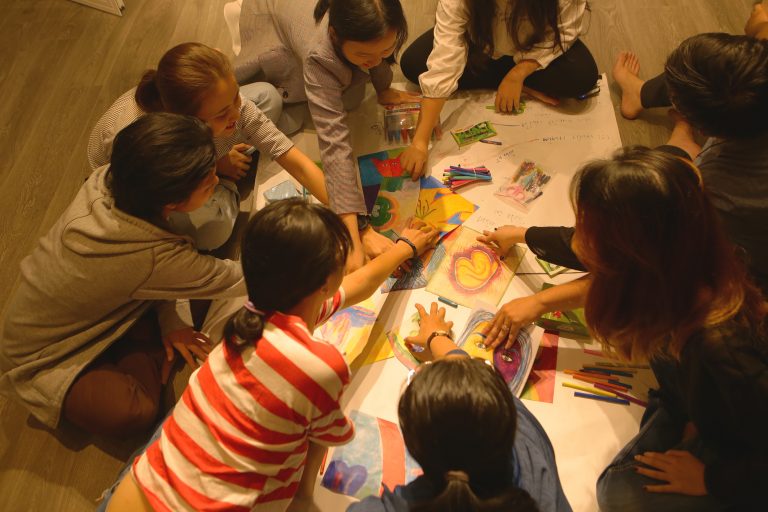
There are many art forms used in this approach. However, the most commonly understood meaning of “art” in art therapy refers to visual arts. Visual art practices used in art therapy include, but are not limited to: drawing with charcoal or pencil, watercolor painting, crayons, collage, narrative drawing, clay work, creative work with fabric and yarn, assembling and arranging three-dimensional forms, and creating with recycled materials and tools.
Art therapy expands opportunities for expression and exploration of personal experiences through diverse creative pathways. Through interaction with different materials and tools, clients can clarify, explore, and work through inner conflicts. With the support and guidance of a trained art therapist, clients may also develop greater self-awareness and a stronger sense of self-trust.
Like other forms of psychological therapies, art therapy helps clients gently access deeper layers of personal experience that may have long been held inside, while also supporting the discovery of inner strengths and possible ways forward.
One of the unique strengths of art therapy is that many clients feel safer and more at ease expressing themselves through images, colors, and creative materials, rather than speaking directly about personal challenges. This creative process can offer an alternative and supportive pathway for expression, insight, and healing, especially when words feel difficult or insufficient
“Stepping away from everyday language, what you discover through images and artworks is always unique. Even the simplest lines and colors often carry a story beneath them. Art therapy opens a door to emotional expression and the release of tension.”
(Nguyễn Đức Như Thuỷ – Master’s degree in Applied Art Psychotherapy, Visual Arts)
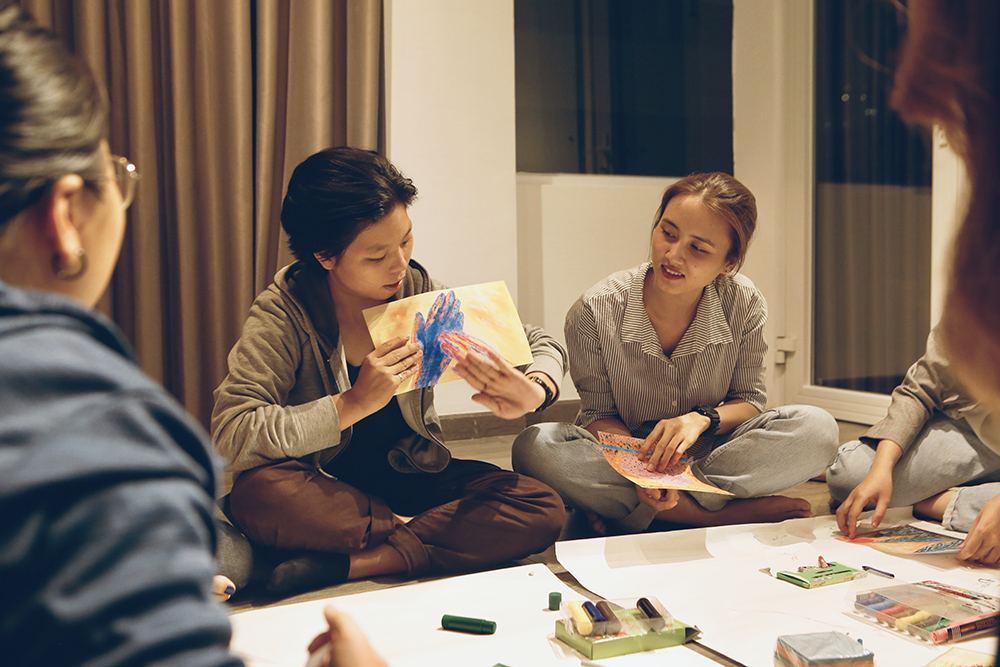
A session typically lasts 60 minutes, and in some cases may extend to 90 minutes, depending on the client’s needs. In each session, the client and therapist engage in discussion and sharing, while also incorporating creative activities. Depending on the client’s needs, comfort level, and therapeutic goals, they may take part in creative processes such as drawing, coloring, clay work, or collage

Art therapy focuses on psychological growth through the creative process, rather than on producing artistic works. At times, you may not touch a paintbrush or pencil at all during a therapy session. In some sessions, you may spend the entire time talking about an image you have chosen from a set of pictures prepared by the art therapist. In other cases, you may work on a single piece over two or three consecutive sessions, engaging in ongoing, in-depth dialogue with the art therapist about the artwork.